6 DAYS / 5 NIGHTS · MAXIMUM SIX GUESTS
6 DÍAS / 5 NOCHES · MÁXIMO SEIS HUÉSPEDES
Six days inside the wild Maya ForestSeis días dentro de la Selva Maya
A private field expedition shaped by wildlife activity, weather, recent monitoring, and the rhythm of the forest.
Una expedición privada de campo guiada por la actividad de la fauna, el clima, el monitoreo reciente y el ritmo del bosque.
THE EXPEDITION AT A GLANCE
A plan with purpose—and room for the unexpected
This is not a conventional tour built around a rigid checklist. Each day has a clear purpose, but routes and timing remain flexible so your guides can respond to wildlife movement, rain, trail conditions, and information from the field team.
LA EXPEDICIÓN EN RESUMEN
Un plan con propósito y espacio para lo inesperado
Este no es un tour convencional basado en una lista rígida. Cada día tiene un propósito claro, pero las rutas y los horarios se mantienen flexibles para responder al movimiento de la fauna, la lluvia, las condiciones de los senderos y la información del equipo de campo.
GETTING THERE
The journey is part of the expedition
From Mundo Maya International Airport in Flores, the route travels by private 4x4 through Tikal and Uaxactún before continuing into increasingly remote forest toward Dos Lagunas.
- Approximately six hours of travel in each direction
- Private transport from and back to Mundo Maya International Airport
- Movement inside the protected area on foot, by 4x4, or by ATV according to the site
- Changing road, rain, and trail conditions are built into the daily planning
CÓMO LLEGAR
El trayecto forma parte de la expedición
Desde el Aeropuerto Internacional Mundo Maya en Flores, la ruta continúa en 4x4 privado por Tikal y Uaxactún antes de internarse en un bosque cada vez más remoto rumbo a Dos Lagunas.
- Aproximadamente seis horas de viaje en cada dirección
- Transporte privado desde y hacia el Aeropuerto Internacional Mundo Maya
- Desplazamientos dentro del área protegida a pie, en 4x4 o en ATV según el sitio
- Las condiciones cambiantes del camino, la lluvia y los senderos se consideran en la planificación diaria
COMPLETE 6-DAY ITINERARY
What each day can reveal
The sequence below is the expedition framework. Your guides may change the order of field sessions when conditions create a better, safer, or more responsible opportunity.
From Flores into the remote forest
Early morning: Meet your host at Mundo Maya International Airport at approximately 6:00 a.m. After a final equipment check, begin the private 4x4 journey north through Tikal and Uaxactún.
Into the forest: The road gradually becomes more remote as the route continues toward Dos Lagunas. The complete transfer takes approximately six hours, depending on road and weather conditions.
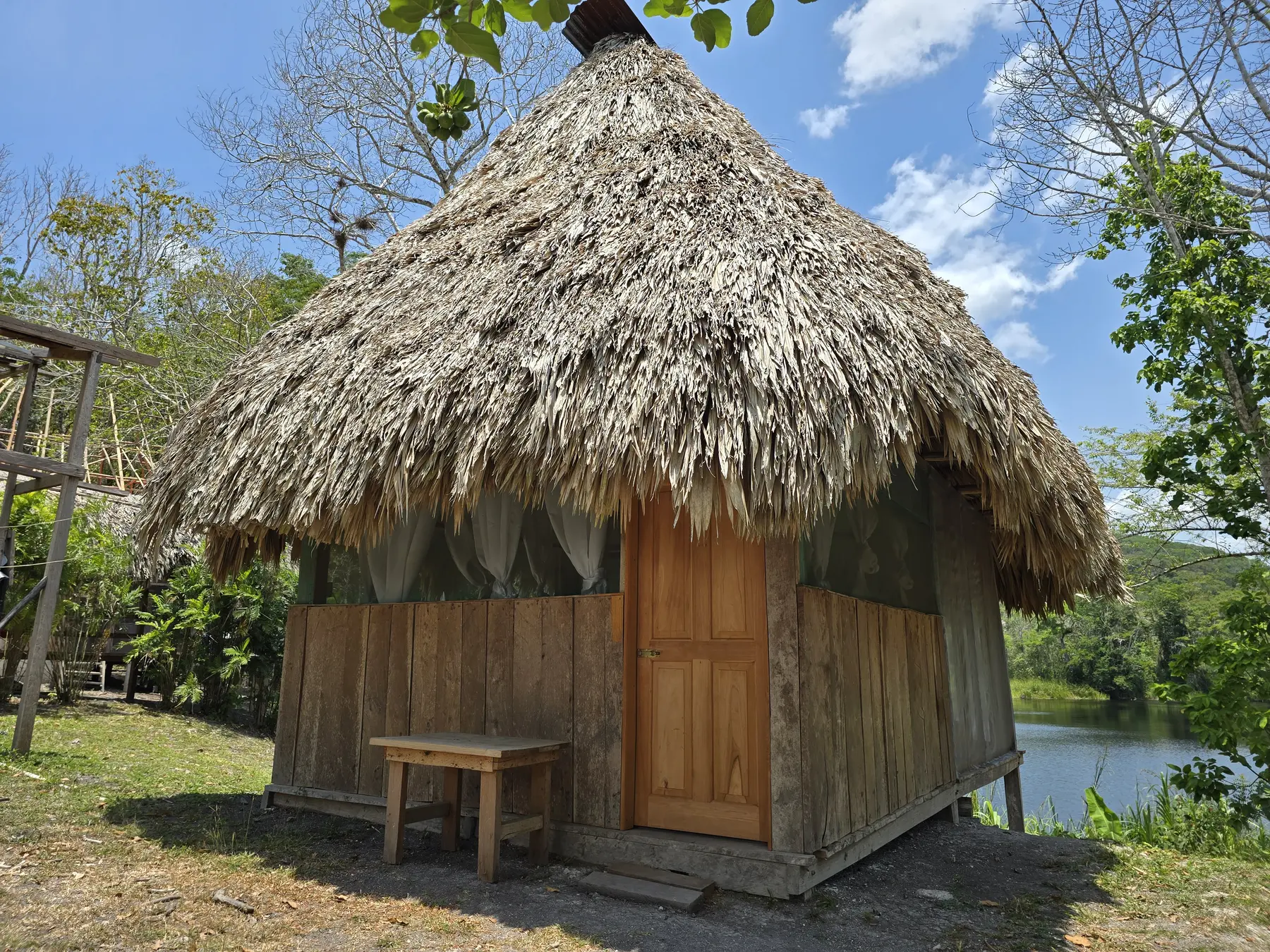
At camp: Settle into your cabin, meet the field team, review camp and safety guidelines, and discuss recent conditions and monitoring information that may influence the first wildlife outing.
Field note: The priority is to arrive safely, become comfortable with the camp, and be ready for an early start the following morning.
Reading the forest from a wildlife hide
Morning: Travel on foot, by 4x4, or by ATV to a water source or monitoring area selected according to recent wildlife signs and field information.
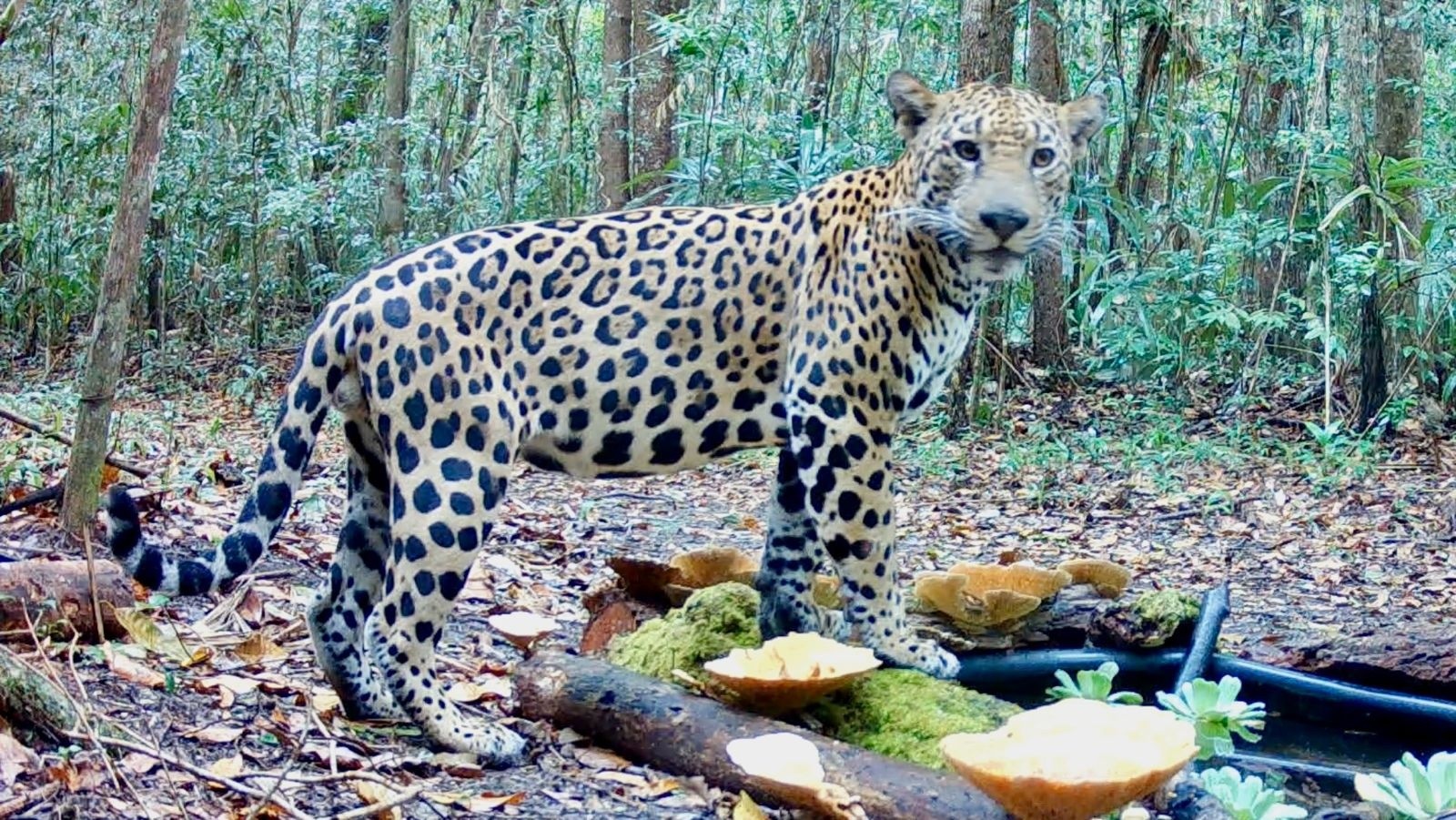
Hide session: Spend approximately four hours inside a photographic hide. Quiet observation creates opportunities to watch natural behavior without calling, baiting, handling, or approaching animals.
Possible wildlife: Jaguars, tapirs, pumas, white-lipped peccaries, deer, monkeys, and forest birds use these landscapes, but every animal remains completely wild and free.
Field note: Sightings are never guaranteed. Waiting, listening, and noticing subtle movement are essential parts of the experience.
Following signs through the deep forest
Daylight exploration: Follow remote trails and wildlife corridors while learning to recognize tracks, movement routes, feeding signs, water use, and other clues that help the team understand activity in the area.
Monitoring in practice: Visit selected camera-trap or monitoring stations when appropriate. Your guide explains how equipment placement, repeated observations, and local knowledge work together.
After dark: Weather and safety permitting, join a guided night expedition. The forest changes after sunset, and sound, movement, and limited light create a completely different way of observing it.
Field note: Monitoring sites always come first. Equipment and sensitive locations are approached carefully and never disturbed for a photograph.
A dawn devoted to Maya Forest birds
Early start: Begin when bird activity is strongest. The route may include forest edge, canopy openings, trails, and water areas depending on weather and recent observations.
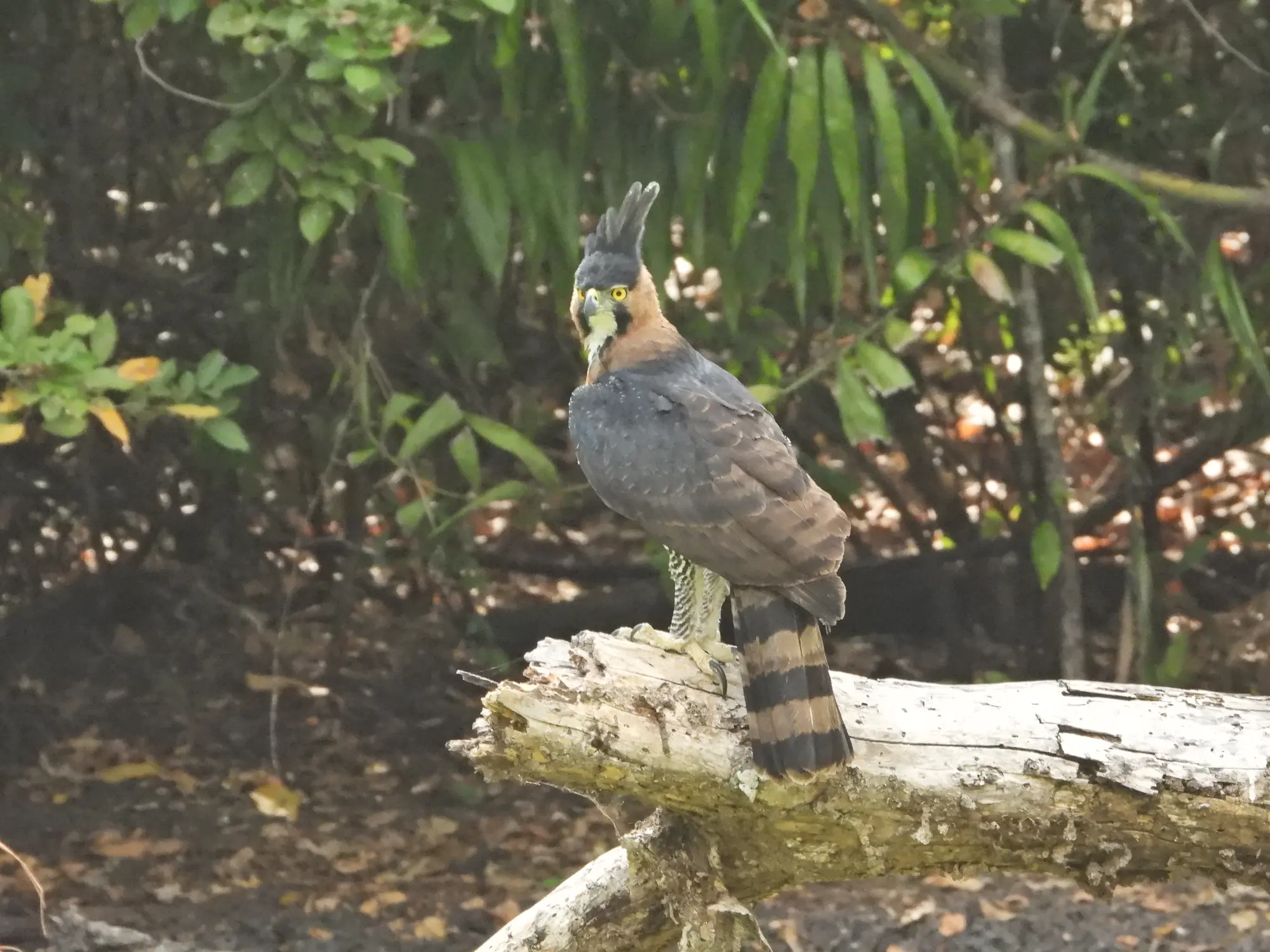
Target species: Look and listen for Ocellated Turkey, Great Curassow, Orange-breasted Falcon, Ornate Hawk-Eagle, Mayan Antthrush, Tropical Royal Flycatcher, Yucatan Flycatcher, Keel-billed Toucan, and many other forest species.
Beyond the list: Your guide connects bird behavior with fruiting trees, forest layers, water, seasonality, and habitat—turning each sighting or call into a broader ecological story.
Field note: The objective is ethical observation. Routes and time at each location adapt to bird activity and the comfort of the animals.
Return to what the forest has revealed
A responsive final field day: Use the evidence gathered during the expedition to return to the most promising hide, trail, water source, or monitoring area. The choice is based on wildlife signs, weather, and access—not on a fixed script.
Optional archaeology: When access, timing, and park conditions allow, the day may include an archaeological visit that reveals how ancient Maya heritage and living forest share the same protected landscape.
Conservation briefing: Close the expedition with a clear explanation of current protection work, the roles of local partners and park authorities, and how 50% of Panthera’s profits are directed strictly toward conservation priorities.
Field note: A final evening or night activity may be selected when conditions make it appropriate and safe.
Leaving the forest, carrying its story
Morning: Have breakfast, pack your equipment, and say goodbye to the camp and field team.
Return transfer: Begin the approximately six-hour private 4x4 journey back through Uaxactún and Tikal to Mundo Maya International Airport in Flores.
Departure planning: The long road transfer is considered when coordinating the final day, and timing remains subject to road and weather conditions.
Field note: Keep water, rain protection, medication, and essential travel items accessible during the drive.
ITINERARIO COMPLETO DE 6 DÍAS
Lo que puede revelar cada día
La secuencia siguiente es el marco de la expedición. Los guías pueden cambiar el orden de las salidas cuando las condiciones ofrezcan una oportunidad mejor, más segura o más responsable.
De Flores hacia el bosque remoto
Temprano por la mañana: Encuentro con tu anfitrión en el Aeropuerto Internacional Mundo Maya aproximadamente a las 6:00 a. m. Después de revisar el equipo, inicia el viaje privado en 4x4 hacia el norte, pasando por Tikal y Uaxactún.
Hacia la selva: El camino se vuelve cada vez más remoto mientras la ruta continúa hacia Dos Lagunas. El traslado completo toma aproximadamente seis horas, según las condiciones del camino y el clima.
En el campamento: Instálate en tu cabaña, conoce al equipo de campo, revisa las normas del campamento y de seguridad, y conversa sobre las condiciones recientes y la información de monitoreo que puede orientar la primera salida.
Nota de campo: La prioridad es llegar con seguridad, familiarizarse con el campamento y estar listo para comenzar temprano al día siguiente.
Leer el bosque desde un escondite de fauna
Por la mañana: Traslado a pie, en 4x4 o en ATV hacia una fuente de agua o un área de monitoreo seleccionada según señales recientes de fauna e información de campo.
Sesión en el escondite: Permanece aproximadamente cuatro horas dentro de un escondite fotográfico. La observación silenciosa crea oportunidades para ver comportamientos naturales sin llamar, cebar, manipular ni acercarse a los animales.
Fauna posible: Jaguares, tapires, pumas, pecaríes de labios blancos, venados, monos y aves del bosque utilizan estos paisajes, pero todos los animales permanecen completamente silvestres y libres.
Nota de campo: Los avistamientos nunca están garantizados. Esperar, escuchar y reconocer movimientos sutiles forman parte esencial de la experiencia.
Seguir señales en el bosque profundo
Exploración diurna: Recorre senderos remotos y corredores de fauna mientras aprendes a reconocer huellas, rutas de movimiento, señales de alimentación, uso del agua y otras pistas que ayudan al equipo a comprender la actividad del área.
Monitoreo en la práctica: Visita estaciones seleccionadas de cámaras trampa o monitoreo cuando sea apropiado. El guía explica cómo la ubicación del equipo, las observaciones repetidas y el conocimiento local trabajan en conjunto.
Después del anochecer: Si el clima y la seguridad lo permiten, participa en una expedición nocturna guiada. El bosque cambia al caer la noche, y los sonidos, el movimiento y la luz limitada ofrecen una forma completamente distinta de observarlo.
Nota de campo: El monitoreo siempre es la prioridad. El equipo y los sitios sensibles se visitan con cuidado y nunca se alteran para obtener una fotografía.
Un amanecer dedicado a las aves de la Selva Maya
Inicio temprano: Comienza cuando la actividad de las aves es mayor. La ruta puede incluir borde de bosque, aperturas del dosel, senderos y áreas de agua según el clima y las observaciones recientes.
Especies objetivo: Busca y escucha pavo ocelado, pavo cojolita, halcón pecho naranja, águila crestada, hormiguero maya, mosquero real tropical, mosquero yucateco, tucán pico iris y muchas otras especies del bosque.
Más allá de la lista: El guía conecta el comportamiento de las aves con los árboles en fruto, los estratos del bosque, el agua, la temporada y el hábitat, convirtiendo cada avistamiento o canto en una historia ecológica más amplia.
Nota de campo: El objetivo es una observación ética. Las rutas y el tiempo en cada lugar se adaptan a la actividad y al bienestar de las aves.
Regresar a lo que el bosque ha revelado
Un último día adaptable: Utiliza la evidencia reunida durante la expedición para volver al escondite, sendero, fuente de agua o área de monitoreo más prometedora. La elección se basa en señales de fauna, clima y acceso, no en un guion fijo.
Arqueología opcional: Cuando el acceso, el tiempo y las condiciones del parque lo permiten, el día puede incluir una visita arqueológica que revela cómo el patrimonio maya antiguo y el bosque vivo comparten el mismo paisaje protegido.
Charla de conservación: Cierra la expedición con una explicación clara del trabajo de protección, el papel de los aliados locales y las autoridades del parque, y cómo el 50% de las utilidades de Panthera se dirige exclusivamente a prioridades de conservación.
Nota de campo: Puede seleccionarse una actividad final al atardecer o por la noche cuando las condiciones sean apropiadas y seguras.
Salir del bosque llevando su historia
Por la mañana: Desayuna, prepara tu equipo y despídete del campamento y del equipo de campo.
Traslado de regreso: Inicia el viaje privado de aproximadamente seis horas en 4x4 por Uaxactún y Tikal hacia el Aeropuerto Internacional Mundo Maya en Flores.
Planificación de salida: El largo traslado por carretera se considera al coordinar el último día, y los horarios continúan sujetos a las condiciones del camino y del clima.
Nota de campo: Mantén accesibles el agua, la protección contra la lluvia, los medicamentos y los artículos esenciales de viaje durante el recorrido.
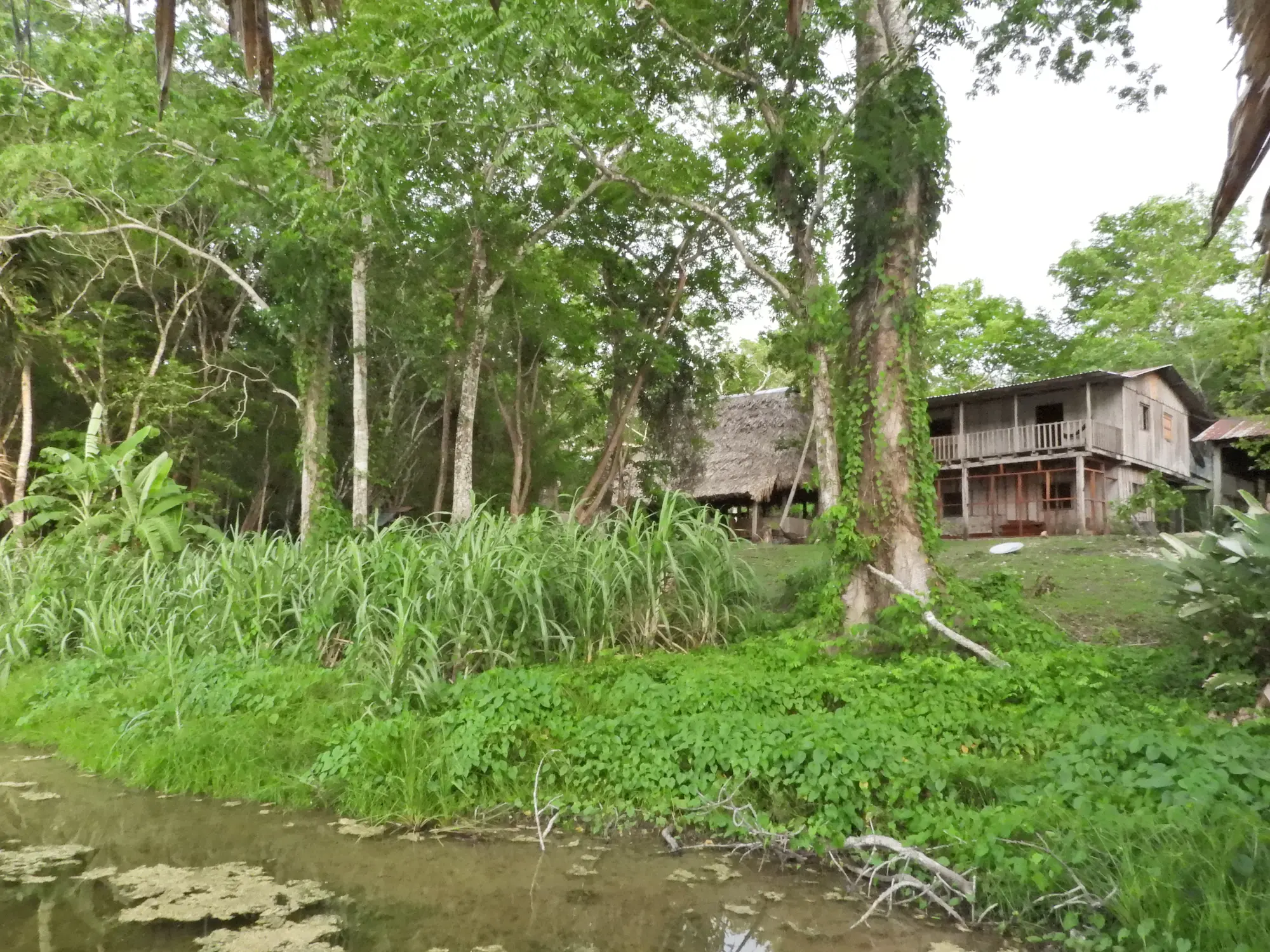
THE RHYTHM OF A FIELD DAY
Early starts, quiet hours, flexible decisions
Early hours
Wildlife and birds often determine the departure time. Some mornings begin before the heat builds, with breakfast and equipment prepared around the selected activity.
Midday reset
Return to camp when appropriate for meals, rest, showers, battery charging, image review, and discussion of what the team observed.
Afternoon & night
A second field session may focus on another trail, hide, water source, sunset period, or night route. Weather and safety always guide the final decision.
EL RITMO DE UN DÍA DE CAMPO
Inicios tempranos, horas silenciosas y decisiones flexibles
Primeras horas
La fauna y las aves suelen determinar la hora de salida. Algunas mañanas comienzan antes de que aumente el calor, con el desayuno y el equipo preparados según la actividad elegida.
Pausa al mediodía
Regreso al campamento cuando corresponde para comer, descansar, ducharse, cargar baterías, revisar imágenes y conversar sobre lo observado por el equipo.
Tarde y noche
Una segunda salida puede enfocarse en otro sendero, escondite, fuente de agua, período del atardecer o ruta nocturna. El clima y la seguridad siempre orientan la decisión final.
EQUIPMENT & PREPARATION
Arrive ready for tropical field conditions
Comfort matters when days include humidity, rain, insects, uneven ground, long periods of quiet observation, and changing plans.
Clothing
Breathable long sleeves and pants, waterproof hiking boots, rain jacket, hat, and neutral colors.
Optics & photography
Binoculars, telephoto lens, extra batteries, memory cards, waterproof protection, and a headlamp.
Health & personal items
Personal medication, basic first aid, repellent, sunscreen, reusable bottle, and toiletries.
Fitness & mindset
Be comfortable walking approximately 3–6 km a day on uneven trails, waiting quietly, and adapting to warm, humid conditions.
EQUIPO Y PREPARACIÓN
Llega preparado para condiciones tropicales de campo
La comodidad importa cuando los días incluyen humedad, lluvia, insectos, terreno irregular, largos períodos de observación silenciosa y cambios de planes.
Ropa
Camisas de manga larga y pantalones transpirables, botas impermeables, impermeable, sombrero y colores neutros.
Óptica y fotografía
Binoculares, teleobjetivo, baterías adicionales, tarjetas de memoria, protección impermeable y lámpara frontal.
Salud y artículos personales
Medicamentos personales, primeros auxilios básicos, repelente, protector solar, botella reutilizable y artículos de higiene.
Condición física y actitud
Debes sentirte cómodo caminando aproximadamente 3–6 km al día en senderos irregulares, esperando en silencio y adaptándote al calor y la humedad.
PRIVATE OR SMALL-GROUP EXPEDITION
USD $2,450 per person
Six days / five nights · All-inclusive from Mundo Maya International Airport · Minimum two guests
EXPEDICIÓN PRIVADA O EN GRUPO PEQUEÑO
USD $2,450 por persona
Seis días / cinco noches · Todo incluido desde el Aeropuerto Internacional Mundo Maya · Mínimo dos huéspedes